Beijing, 9 February 2026 – A four-member delegation from Thailand’s Office of the Public Sector Development Commission (OPDC) visited China from 3 to 8 February for a study tour focused on sustainable forest management, forestry carbon sinks, digital forestry technologies and industrial integration policies. The programme was organized and coordinated by the Asia-Pacific Network for Sustainable Forest Management and Rehabilitation (APFNet).
In Guangxi, the delegation observed models of mixed forest management and under-forest economy at the Qipo Forest Farm, learned about carbon sink monitoring and trading practices at Gaofeng Forest Park, visited the smart and green production facilities of Aige Workshop, and explored advanced tree breeding techniques at the Bagui Seedling Science and Education Center. They also examined the integrated Camellia oleifera industry chain at the Guangxi Academy of Forestry and held policy exchanges with the Guangxi Forestry Bureau on forestry innovation and industrial development.
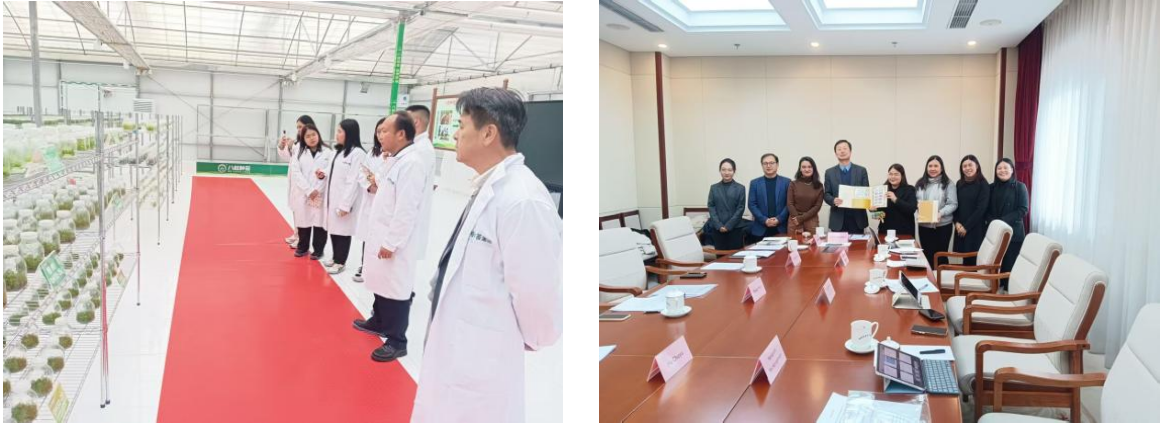
Image 1: Learning about the Cutting-edge breeding technologies at the Bagui Seedling Science and Education Center.
Image 2: Discussion with the National Forestry and Grassland Administration (NFGA) on under-forest economy and carbon sink market policies.
During their stay in Beijing, the delegation met with representatives from the National Forestry and Grassland Administration(NFGA) to discuss policy measures related to under-forest economy and forestry carbon markets. They also visited the Chinese Academy of Forestry(CAF), and discussed with experts on forest remote sensing and monitoring, LiDAR-based carbon measurement, carbon footprint assessment of wood products, and forestry carbon sink finance.
The delegation commended China's progress in advancing sustainable forest management and highlighted the tangible implementation of the "lucid waters and lush mountains are invaluable assets" concept in Guangxi. They also noted the effectiveness of China’s coordinated “policy-technology-industry” approach across different levels of governance.
Key insights drawn from the study tour include the value of integrated forest economy models, combined long-cycle and short-cycle management, whole-industry-chain development, digital technology applications, and strategic forest asset management, all of which offer valuable references for Thailand’s policy making on low-carbon forestry development.
APFNet coordinated the overall programme and facilitated engagements with relevant Chinese agencies and institutions. The Thai delegation expressed cordial appreciation for the substantive exchanges and well-organized itinerary.
The OPDC serves as a key policy advisory body reporting to the Thai Prime Minister’s Office. Delegates were selected from its flagship capacity-building programme- Public Service Agent for Change Development Program (PSAC) , which aims to foster government officials capable of driving cross-sectoral innovation and sustainable development.