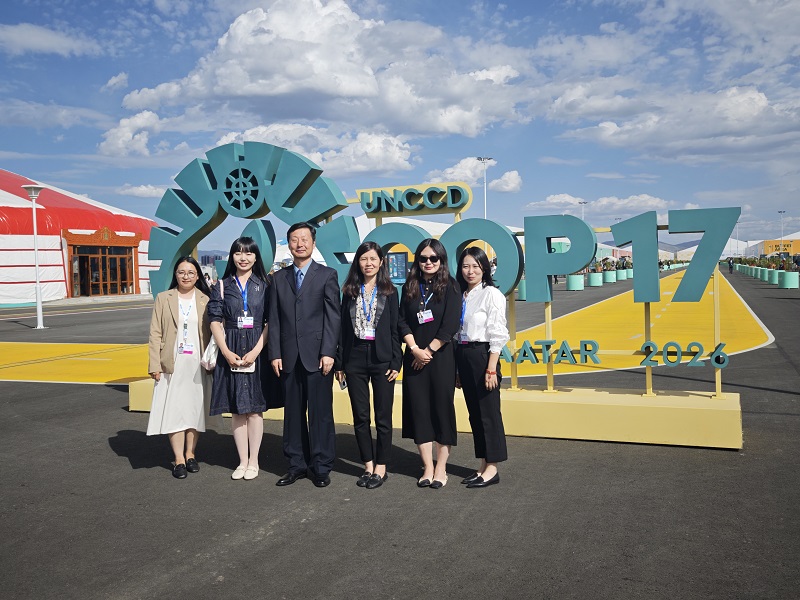
Group photo of APFNet and Coordination Center team
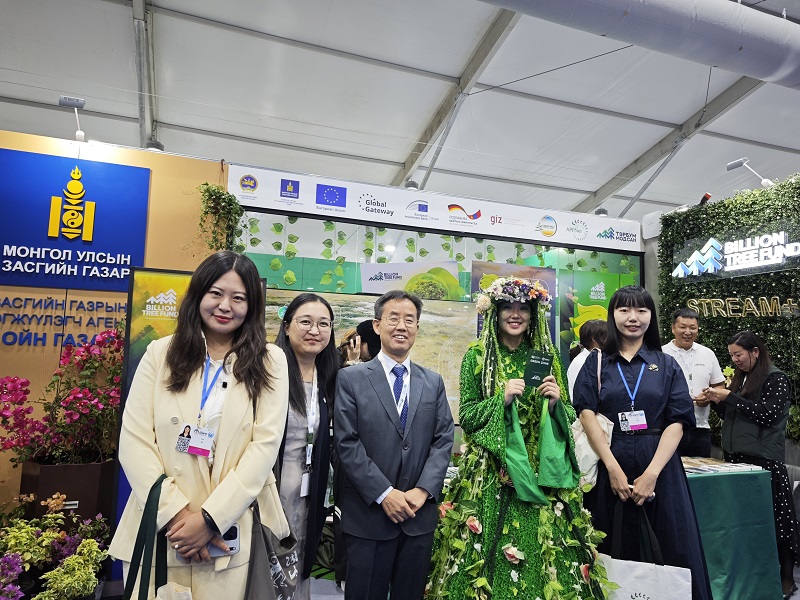
APFNet team at the National Forest Agency pavilion, in the Green Zone, COP17 venue.
24–26 August 2026, Ulaanbaatar, Mongolia – APFNet, together with its partners, organized two side events during the 17th session of the Conference of the Parties to the United Nations Convention to Combat Desertification (UNCCD COP17), highlighting regional experiences in forest restoration and desertification control and promoting broader cooperation on sustainable forest management.
The two events brought together representatives from governments, international organizations, research institutions, and other stakeholders to exchange practical experiences and explore how regional and global cooperation can help restore degraded landscapes and build more resilient forest ecosystems.
Turning Regional Cooperation into Restoration Action in Greater Central Asia
On 24 August, APFNet and the National Forest Agency (NFA) of Mongolia jointly organized the side event “Regional Cooperation for Forest Rehabilitation and Restoration: Accelerating Action against Desertification in Greater Central Asia” at the NFA Pavilion in the COP17 Green Zone.
Greater Central Asia faces interconnected challenges from climate change, water scarcity, land degradation and desertification, biodiversity loss, and increasing risks of forest and grassland fires. These challenges extend beyond individual economies and require stronger regional cooperation and locally adapted approaches. The event therefore focused on how policy dialogue, scientific knowledge and practical projects can work together to accelerate forest and landscape restoration.
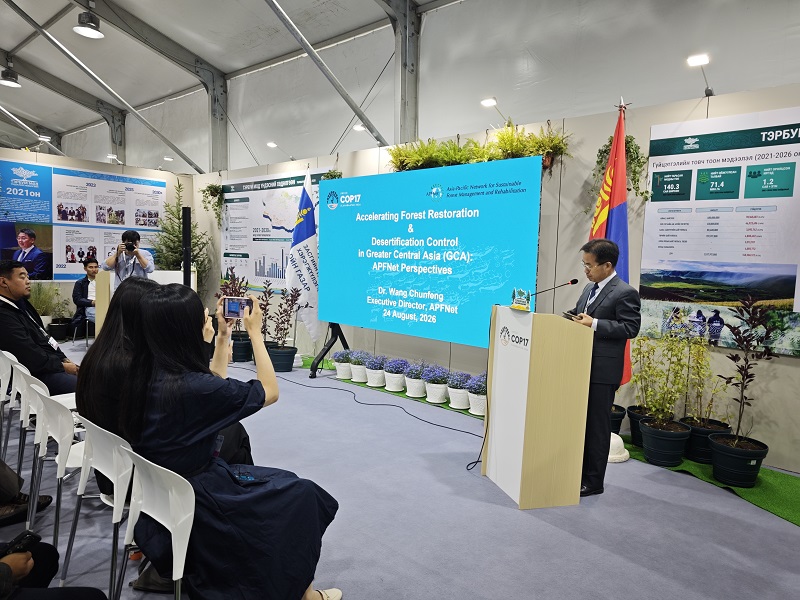
Dr. Wang Chunfeng giving his opening remark
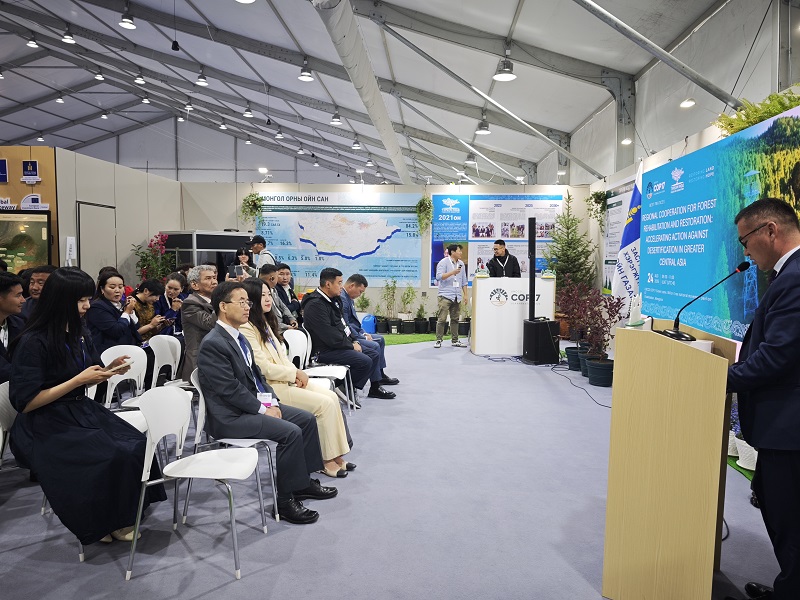
Dr. Oyunsanaa Byambasuren giving his opening remark.
Opening the event, Dr. Wang Chunfeng, Executive Director of APFNet, and Dr. Oyunsanaa Byambasuren, Director General of the National Forest Agency of Mongolia, underscored the value of regional cooperation in responding to shared ecological challenges.
Ms. Wang Jiayi, Director of APFNet’s Policy Dialogue Division, reviewed the progress, achievements and future direction of the Greater Central Asia Forestry Cooperation Mechanism (GCA-FCM). Through ministerial dialogues, technical exchanges, demonstration projects and capacity-building activities, the mechanism has provided an important platform for participating economies to exchange experiences and strengthen cooperation on sustainable forest management, restoration and other common forestry challenges. The event also explored how the mechanism could move further from dialogue towards more coordinated and practical cooperation.
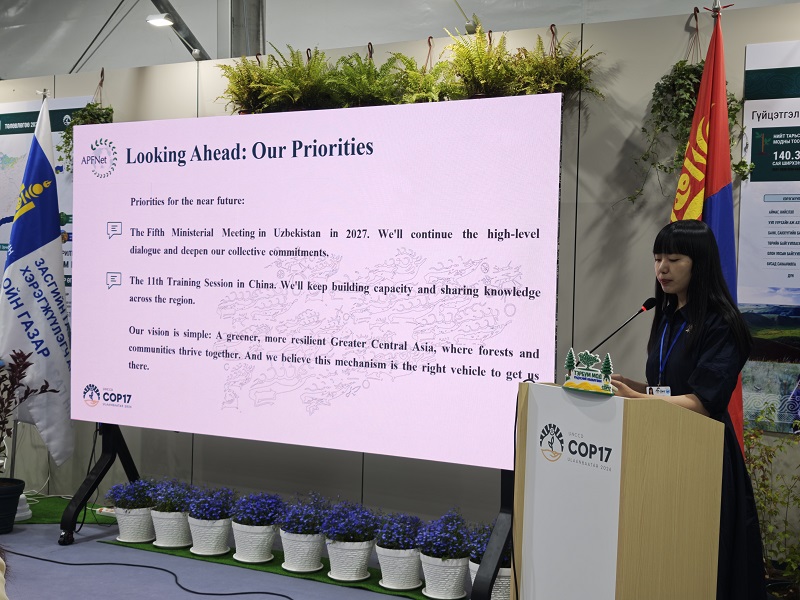
Ms. Wang Jiayi during her presentation.
Turning to restoration on the ground, Ms. Ma Kun, Project Manager of APFNet’s Project Management Division, shared experiences from APFNet-supported forest restoration, including the Sanyijing Forest Farm in Aohan Banner, Inner Mongolia, China. The case demonstrated the importance of selecting restoration approaches according to local ecological conditions rather than simply replicating models from elsewhere. Scientific planning, appropriate species and restoration techniques, long-term monitoring and consideration of local livelihoods were highlighted as important elements for improving restoration effectiveness.
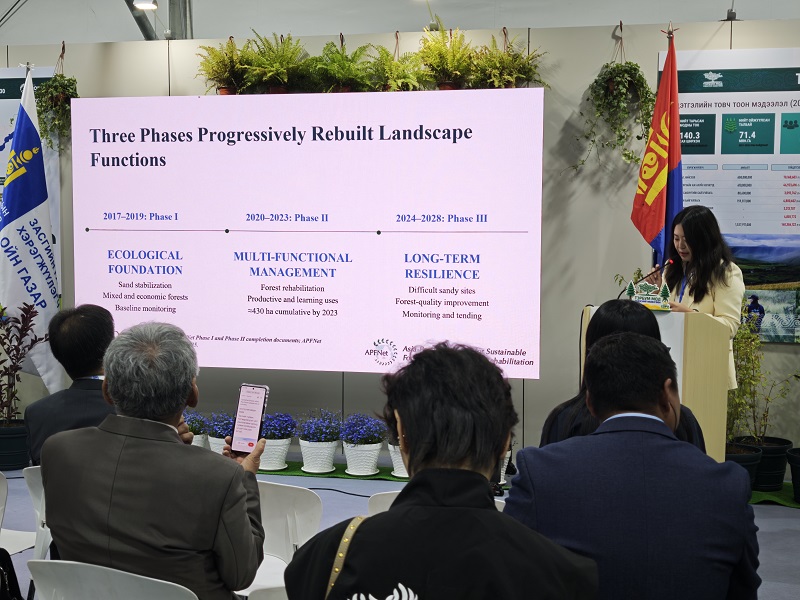
Ms. Ma Kun during her presentation.
From Mongolia, Mr. Amanjol Bulkhbai, Senior Specialist for Forest Fire Management at NFA, presented Mongolia’s experiences and innovations in strengthening forest resilience, as well as ongoing cooperation between NFA and APFNet. With forest fires becoming an increasing threat under changing climatic conditions, the presentation highlighted the importance of prevention, monitoring, and early warning, as well as opportunities to strengthen regional exchanges, technical training, and cooperation on forest fire management.
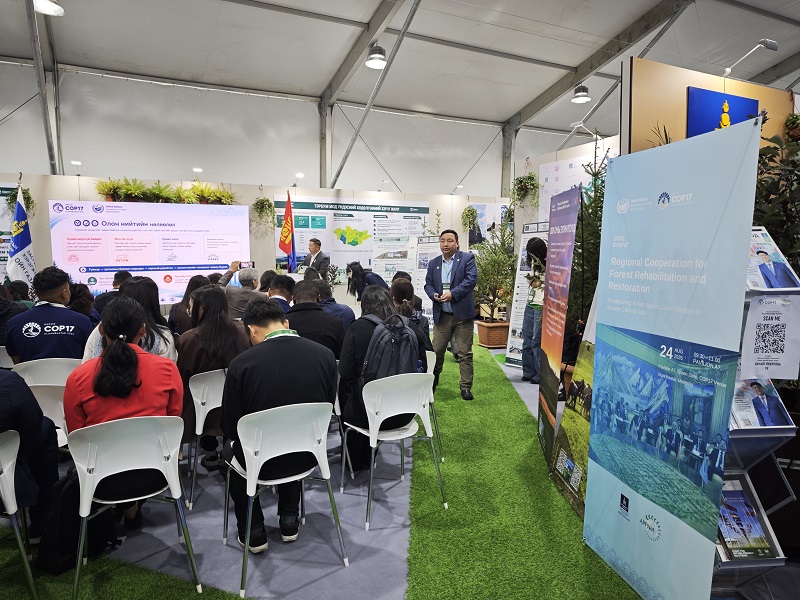
Mr. Amanjol Bulkhbai during his presentation.
Bringing the presentations together, Dr. Wang Chunfeng discussed how research and projects can help accelerate restoration and control desertification across the region. Among the approaches highlighted was the principle of “water-dictated greening,” emphasizing that restoration and afforestation in arid and semi-arid areas should respect local water availability and ecological carrying capacity. The discussion also touched on integrating restoration with local livelihoods and sustainable industries, including the potential of seabuckthorn in dryland restoration and livelihood development.
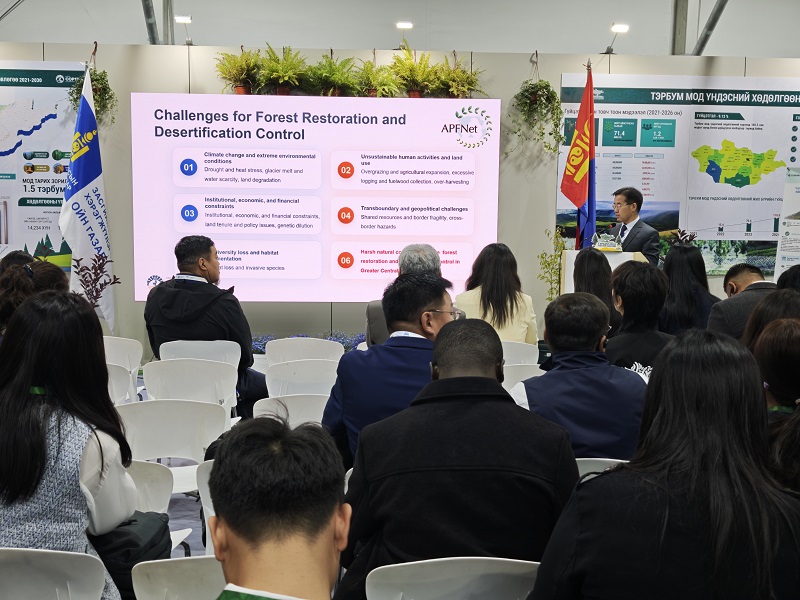
Dr. Wang Chunfeng giving his presentation.
The presentations were followed by an interactive dialogue on how restoration experiences can be adapted to different local conditions, how regional cooperation on forest-fire monitoring and prevention could be strengthened, and what priorities should guide forestry cooperation in Greater Central Asia over the coming years.
The event reinforced a common message: successful restoration requires not only planting trees but also applying the right approaches in the right places, strengthening ecosystem resilience, supporting local livelihoods, and sustaining cooperation over the long term.
The side event was designed to increase the visibility of GCA-FCM, share practical restoration experiences, and identify future priorities for regional cooperation.
From Sustainable Forest Management Practices to a Global Network
On 26 August, APFNet continued its COP17 engagement with the side event “Actions and Future of the Global Network for Sustainable Forest Management (GFN)” at the China Pavilion in the Blue Zone.
The event attracted about 50 participants throughout the session, reflecting strong interest in sustainable forest management and opportunities for international cooperation. It brought together perspectives from APFNet, China, and Mongolia, and connected practical experiences in sustainable forest management with discussions on the future development of GFN.
Dr. Wang Chunfeng, Executive Director of APFNet, introduced the background, mission and objectives of GFN and shared progress since the Network was launched in 2023. GFN seeks to connect partners and facilitate practical cooperation through four main approaches: demonstration projects, policy dialogue, capacity building and information sharing. Dr. Wang also introduced the Network’s developing cooperation structure and future direction, including its Advisory Group and work towards an action plan for 2027–2029.
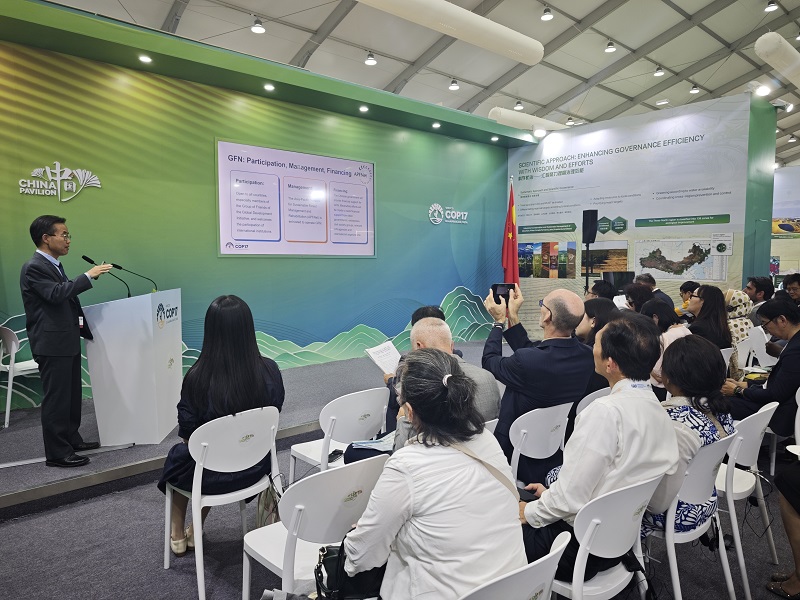
Dr. Wang Chunfeng, keynote presentation.
The presentation was followed by an exchange with participants on how GFN could further develop as an open and practical platform for sharing knowledge, connecting initiatives and strengthening cooperation among its members and partners. The agenda dedicated the first 30-minute session to GFN's background, mission, objectives, progress and interaction with participants.
Dr. Zhai Hongbo, Deputy Director General of the Coordination Center for APFNet under the National Forestry and Grassland Administration of China, then shared China’s experiences in sustainable forest management. His presentation introduced China's efforts to strengthen forest management through policy, institutional arrangements, restoration programs and public participation. Examples included the GFN initiative, the Three-North Shelterbelt Forest Program, the forest-chief system and large-scale voluntary tree-planting efforts. The presentation also illustrated how ecological restoration can be combined with livelihood improvement and green industries, as well as China's experience in international cooperation on forestry and combating desertification.
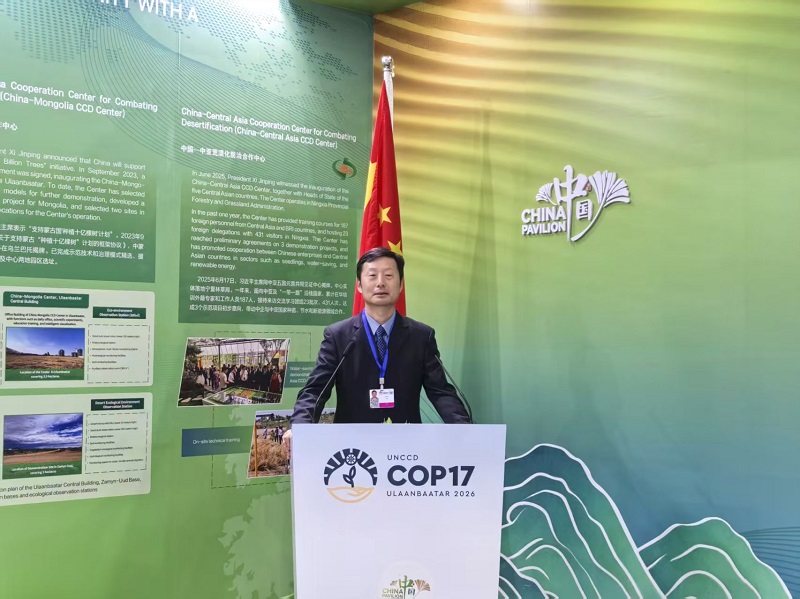
Dr. Zhai Hongbo, keynote presentation.
These experiences demonstrated that sustainable forest management involves more than increasing forest area: improving forest quality, strengthening management systems, engaging communities and creating sustainable livelihood opportunities are equally important for achieving long-term ecological benefits.
Providing another perspective from Greater Central Asia, Dr. Oyunsanaa Byambasuren, Director General of the National Forest Agency of Mongolia, presented Sustainable Forest Management in Mongolia. His presentation brought Mongolia’s experiences and challenges into the discussion, illustrating the particular importance of sustainable management and forest resilience in an economy facing harsh climatic conditions, land degradation, forest fires and increasing pressures associated with climate change.
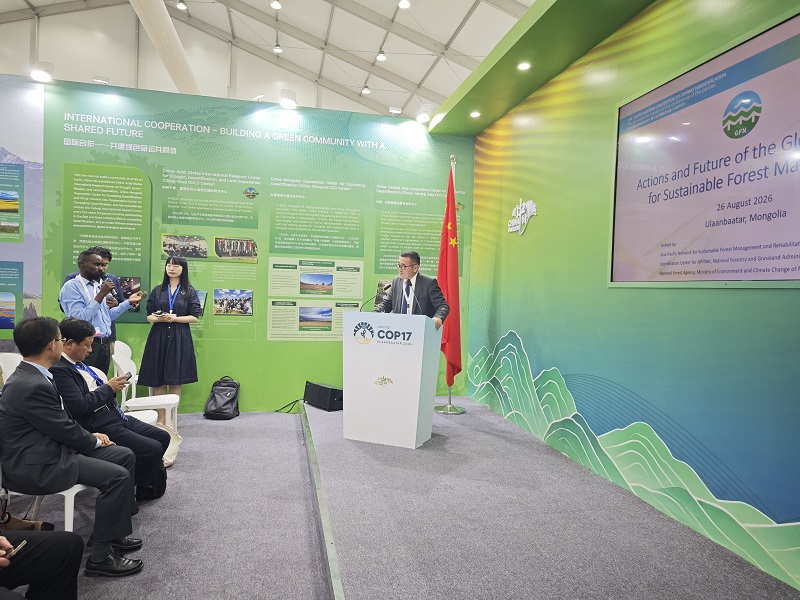
Dr. Oyunsanaa Byambasuren, keynote presentation.
The China and Mongolia presentations were each followed by discussion and interaction with participants, allowing experiences from different ecological and socioeconomic contexts to inform the broader conversation on sustainable forest management.
The active participation throughout the event demonstrated the value of GFN as a platform through which different experiences can be shared, adapted and connected. Rather than promoting a single model of sustainable forest management, the discussions highlighted the importance of learning from diverse approaches and translating that knowledge into locally appropriate action.
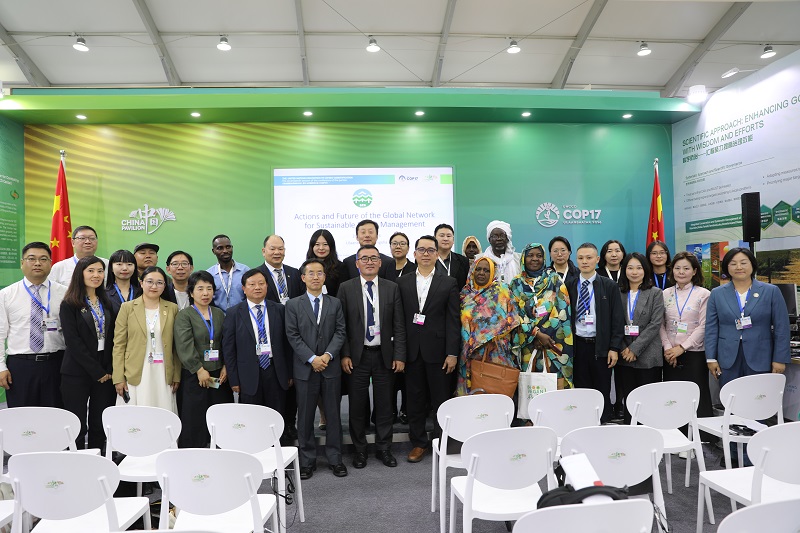
Group photo with side-event participants at the China Pavilion in the Blue Zone, COP17 venue. Photo by B.Bilguutei, NFA of Mongolia
Connecting Regional Experience with Global Cooperation
Together, the two side events reflected complementary dimensions of APFNet’s work at COP17.
The Greater Central Asia event demonstrated how regional cooperation can translate shared challenges into practical action, connecting policy dialogue with restoration projects, scientific approaches, forest-fire management and livelihood considerations. The GFN event broadened this perspective, exploring how experiences from different economies and regions can be connected through a global platform for sustainable forest management.
The events also strengthened cooperation among APFNet, the National Forest Agency of Mongolia and the Coordination Center for APFNet under the National Forestry and Grassland Administration of China, while creating opportunities to engage with a wider range of COP17 participants and potential partners.
Through the two side events, APFNet brought together regional cooperation, practical experience and global networking, contributing forest perspectives to the broader COP17 agenda on combating desertification, restoring degraded land and building resilient ecosystems.
Building on the discussions and partnerships developed in Ulaanbaatar, APFNet will continue working with its partners to strengthen knowledge sharing, practical cooperation and locally adapted approaches to sustainable forest management and restoration across the Asia-Pacific region and beyond.