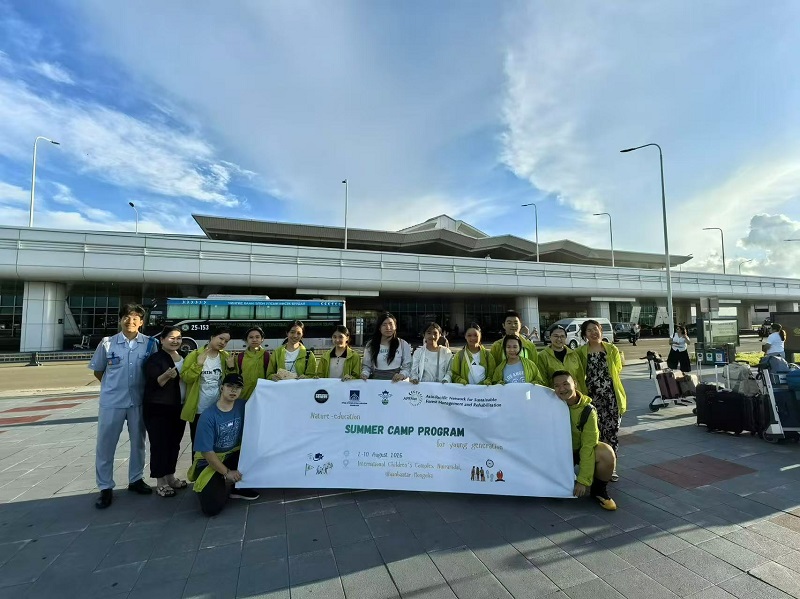
Participants arrived at the Chinggis Khaan airport in Ulaanbaatar, Mongolia
A group of Chinese children participated in an international summer camp program at the Nairamdal International Children’s Center in Mongolia from 2 to 10 August 2026, joining Mongolian children for seven days of cultural exchange, environmental learning and outdoor activities.
The program was organized in cooperation with the Embassy of Mongolia in China and the General Authority for Child and Family Development and Protection of Mongolia, and co-hosted by the Asia-Pacific Network for Sustainable Forest Management and Rehabilitation (APFNet). APFNet supported the participation of children from China, including coordinating their nominations, registration, and travel arrangements.
The program provided an opportunity for the children to experience Mongolia’s natural environment and culture while building friendships with their Mongolian peers. Through recreational, educational, and cultural activities, participants learned about one another’s traditions and experienced everyday life in an international summer camp setting.
Learning about forests through tree planting
One of the highlights of the program was a joint tree-planting activity, which brought environmental learning into the children’s summer camp experience.
Working together, the participants planted young trees at the camp and learned through hands-on experience about the importance of trees, forests, and environmental protection. The activity also provided a practical setting for the children to cooperate and share their understanding of how to care for nature.
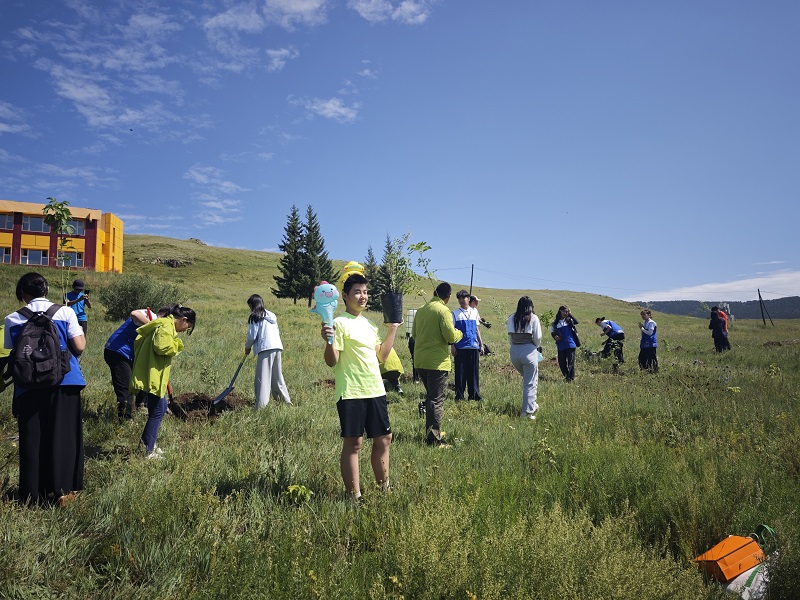
Participants take part in a tree-planting activity at Nairamdal International Children’s Center.
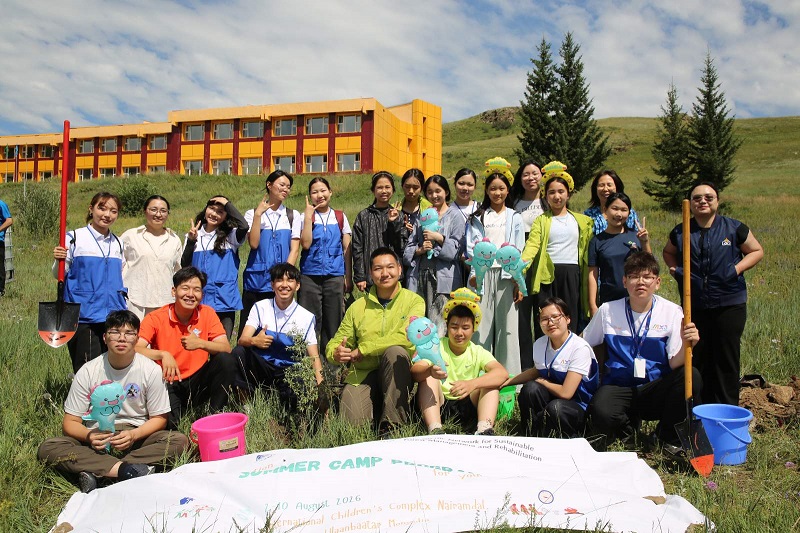
Participants work together to plant young trees, combining environmental learning with hands-on experience.
The tree-planting activity reflected the broader purpose of the exchange: helping young people develop an appreciation of nature while encouraging friendship and mutual understanding across cultures. By taking part in a practical environmental activity together, the children turned these ideas into a shared experience.
Sharing everyday camp life
Beyond the environmental activities, living and participating in the camp together were important parts of the program. The Chinese participants stayed at Nairamdal International Children’s Center and shared daily camp life with other participants.
The experience gave them opportunities to communicate, participate in group activities, discover Mongolian culture, and form new friendships in an informal setting. For many of the children, the program offered a memorable opportunity to experience Mongolia and interact closely with their peers outside the classroom.
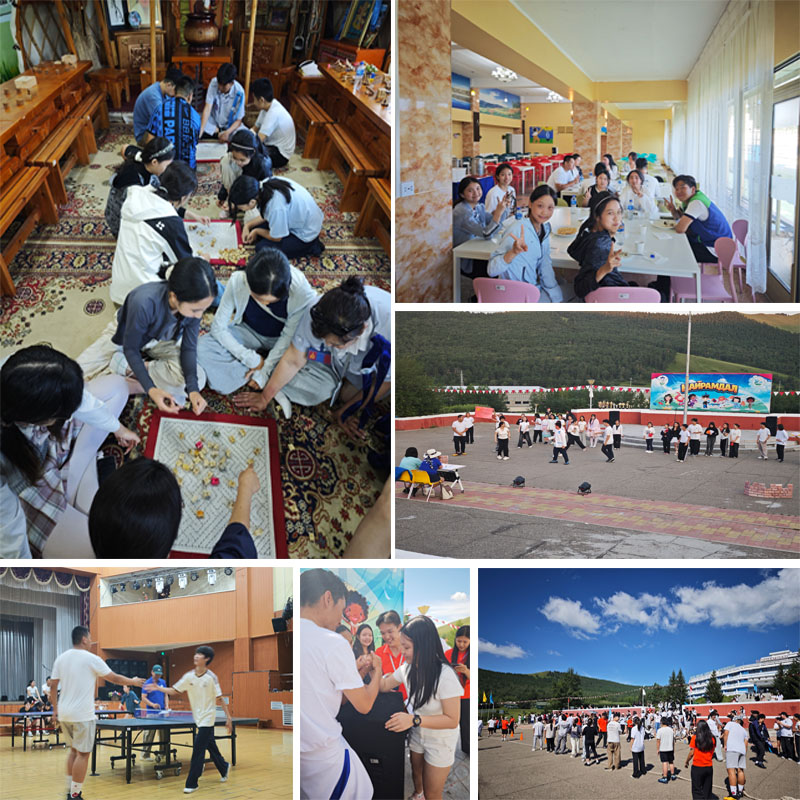
Participants settled into their accommodation at Nairamdal International Children’s Center, where shared daily life formed an important part of the summer camp experience.
Building friendship through the next generation
The summer camp demonstrated how youth exchanges can complement broader cooperation by connecting environmental awareness with people-to-people friendship. Bringing children together around nature, culture and shared activities can help foster mutual understanding from an early age and encourage younger generations to take an active interest in environmental protection.
The program also provided useful experience for continued cooperation among the participating organizations in promoting future youth exchanges and environmental education activities between China and Mongolia.
After completing the seven-day program, the Chinese participants departed Ulaanbaatar with new friendships, shared memories and a deeper appreciation of Mongolia’s culture and natural environment.
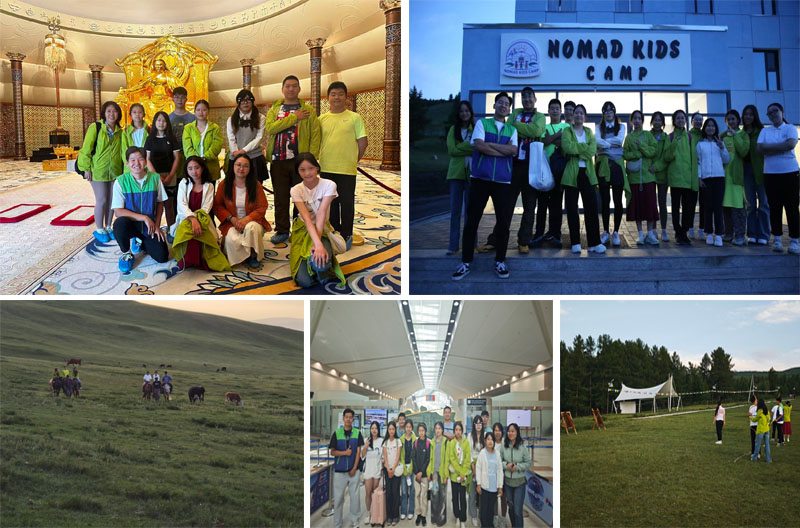
Participants and accompanying staff visited Chinggis Khaan Museum, “Nomad kids” camp for cultural activities such horse riding, archery and other.