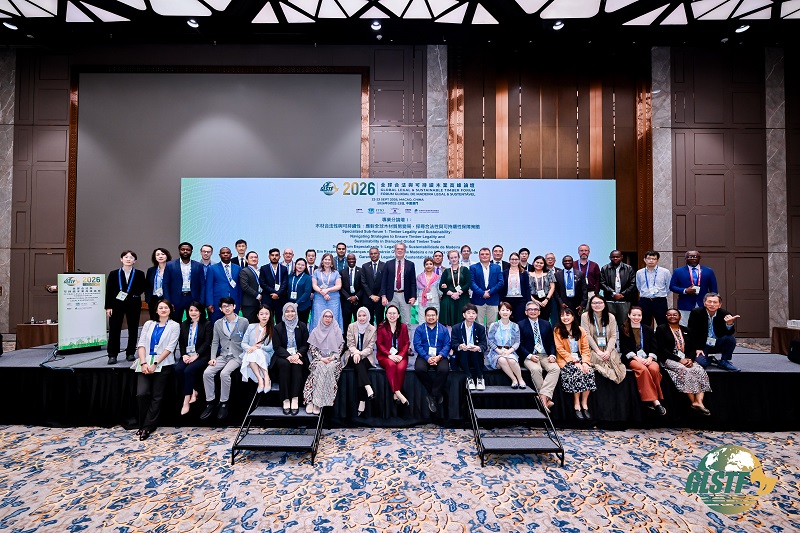
22-23 September 2026, Macao SAR, China – APFNet participated in the Global Legal and Sustainable Timber Forum 2026 (GLSTF 2026), bringing together government representatives, industry leaders, certification bodies, NGOs, researchers and international organizations from 49 economies to explore pathways towards resilient and sustainable global timber industries.
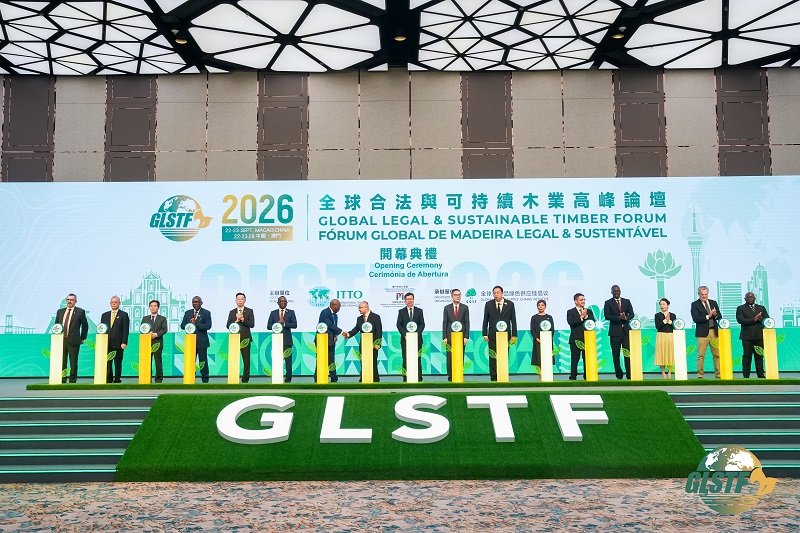
Under the theme “Innovation and Transformation – Pursuing Avenues for Resilient and Sustainable Global Timber Industries”, the Forum focused on how innovation, transformation and international cooperation can strengthen timber supply chains and support the sustainable development of the global timber sector. The Forum was co-hosted by the International Tropical Timber Organization (ITTO) and the Commerce and Investment Promotion Institute of the Macao SAR (IPIM) and organized by the Global Green Supply Chains Initiative (GGSC).
Opening the Forum, Ms Sheam Satkuru, Executive Director of ITTO, highlighted the need for multistakeholder collaboration to achieve a resilient and sustainable timber industry during a time of significant global disruption, she summarised the relationship between legality and sustainability, stating: “Legality is the foundation. Sustainability is the goal.”
Advancing innovation across the timber value chain
On 22 September, Dr. Wang Chunfeng, Executive Director of APFNet, joined the high-level panel on “Innovation and Transformation – Pursuing Avenues for Resilient and Sustainable Global Timber Industries”, together with senior representatives from governments, industry and international organizations. The session explored the challenges facing the timber sector amid global disruptions and the opportunities for innovation and transformation to strengthen supply-chain resilience.
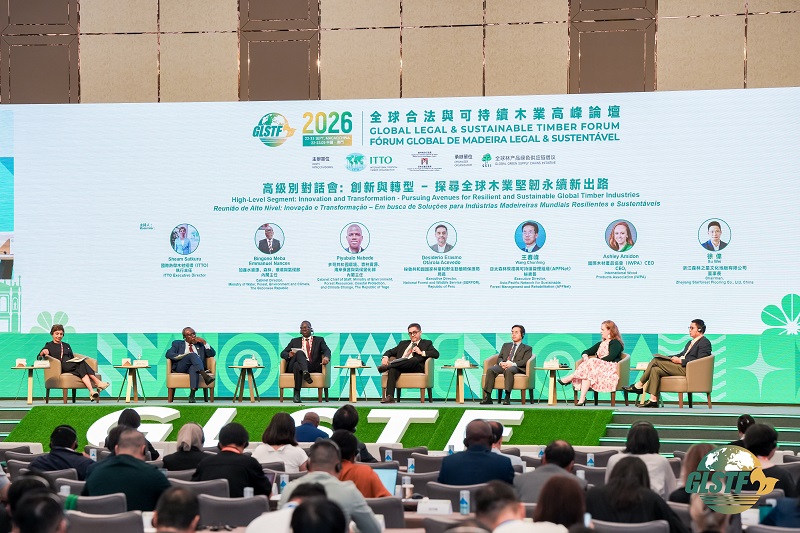
Dr. Wang stressed the importance of integrated system innovation, noting that the development of sustainable timber industries requires a whole-system approach that considers the entire timber supply chain upstream, midstream and downstream. Rather than addressing individual stages in isolation, innovation and transformation need to take place across the chain, from forest management and timber production to processing, manufacturing, markets, consumption and the end-of-life use and recycling of wood products. Such an integrated approach can help improve the efficiency and value of timber resources, extend product lifespans which will strengthen the contribution of sustainable timber industries to climate action, biodiversity conservation and sustainable development.
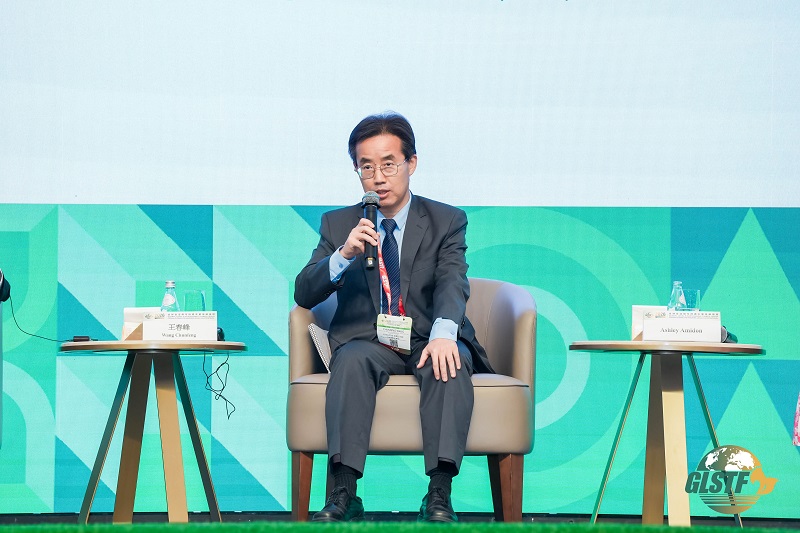
He highlighted that the approach also recognizes the multiple climate benefits of wood products through sequestration, storage and substitution: sustainably managed forests can sequester carbon, wood products can store carbon throughout their useful lives, and the use of timber can substitute more carbon-intensive materials and products. He further emphasized that a whole-system approach requires improving current forest-related carbon accounting methodologies. Consequently, the IPCC may need to revise its guidelines regarding forest carbon.
Collaboration for resilient timber industries
Across the two-day Forum, speakers from a diverse range of organizations and sectors highlighted the interconnected challenges facing the timber sector and the need for continued collaboration and cooperation throughout the value chain. The discussions highlighted the interconnected challenges and opportunities facing the global timber sector.
During the Forum, participants examined issues including supply-chain disruptions, timber legality and traceability, technological innovation, value addition, market development, finance and investment, and capacity building. While perspectives varied across the different parts of the industry, discussions repeatedly highlighted the importance of working collectively to strengthen resilience. They highlighted the need for capacity building and technological innovation, while ensuring that policies, regulations and market requirements are practical, implementable and responsive to conditions on the ground.
These discussions underscored that building resilient and sustainable timber industries requires action across the entire system. Stronger connections between forest managers, producers, processors, traders, regulators, certification bodies, researchers and end users can help translate commitments on legality and sustainability into practical action throughout the supply chain.
From supply-chain resilience to sustainable development
For APFNet, the Forum provided an opportunity to share perspectives from the Asia-Pacific region and engage with international partners on how innovation and cooperation can support sustainable forest management and the development of resilient timber industries.
Through continued policy dialogue, knowledge exchange and cooperation, APFNet will work with partners to promote integrated approaches to sustainable forest management and timber value chains, contributing to climate action, biodiversity conservation and
sustainable development across the Asia-Pacific region and beyond.