The 5th International Forum on Forest Policy and Economics was held at Beijing Forestry University (BFU) on 17 October 2026. Jointly hosted by BFU and Division 9 of the International Union of Forest Research Organizations (IUFRO), the forum focused on “Sustainable Forestry: Strategies for Climate Resilience and Carbon Neutrality.” Discussions covered sustainable forestry policies, the green transition of forest-based industries, and mechanisms for realizing the value of forest ecosystem goods and services. Dr. Chunfeng Wang, Executive Director of the Asia-Pacific Network for Sustainable Forest Management and Rehabilitation (APFNet), attended the opening ceremony and delivered remarks.
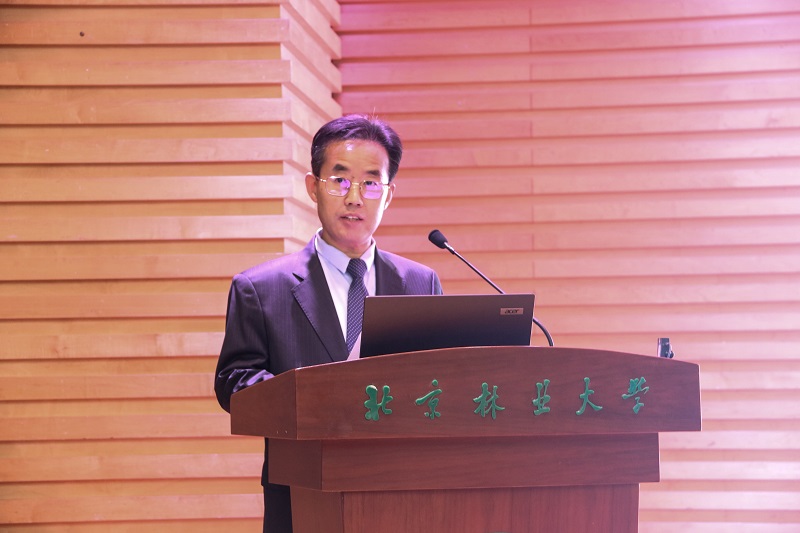
Dr Wang Chunfeng delivering opening speech
Dr. Wang noted that the forum’s themes were closely aligned with APFNet’s Fourth Strategic Plan (2026–2030), reflecting shared priorities in addressing climate change, conserving biodiversity, and advancing inclusive development. He highlighted four priorities for advancing sustainable forestry.
First, move from broad aspirations to precise actions. Forest and climate commitments must be translated into measurable, verifiable, and actionable measures. Clear baselines, reliable data, and effective policies are required to connect overarching goals with local implementation. Approaches should also account for differences among ecosystems, communities, and stages of development, ensuring that policies are scientifically sound, locally adapted, and socially inclusive.
Second, match ambition with precision. Forests are diverse, and no single policy can suit every ecosystem, community, or stage of development. Effective policies therefore require approaches grounded in science, tailored to local conditions, and inclusive of different stakeholders.
Third, strengthen system-wide innovation. Greater coordination is needed across forest management, processing and manufacturing, markets, consumption, and resource recovery and recycling. This integrated approach can enable sustainable timber industries to contribute to climate action, biodiversity conservation, and sustainable development.
Fourth, enhance collaboration. Stronger links are needed between research and policy, producers and manufacturers, and public institutions and local communities, alongside closer cooperation among economies across the Asia-Pacific region.
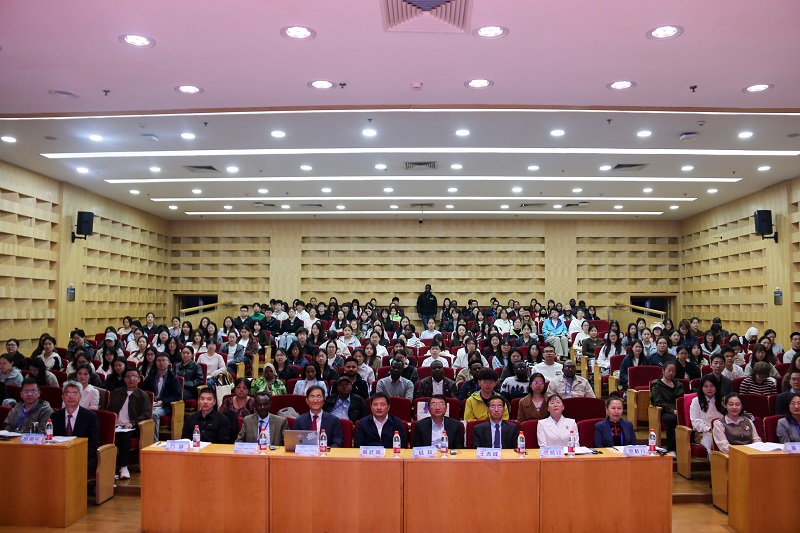
Group photo
The forum also featured a parallel session entitled “Workshop on Policy Innovation for Sustainable Forest Management and Rehabilitation in the Asia-Pacific Region.” This session was held as one of the activities of the APFNet-funded project “Policy Innovation Mechanisms for Sustainable Forest Management in the Asia-Pacific Region (2026P1-RUC).” Representatives from APFNet’s Project Management Division attended and contributed to the discussions. The three-year project is executed by Renmin University of China and jointly implemented by its School of Agricultural Economics and Rural Development and BFU’s School of Economics and Management. It aims to help reduce deforestation and forest degradation, promote sustainable forest management, and advance sustainable development goals across the Asia-Pacific region.
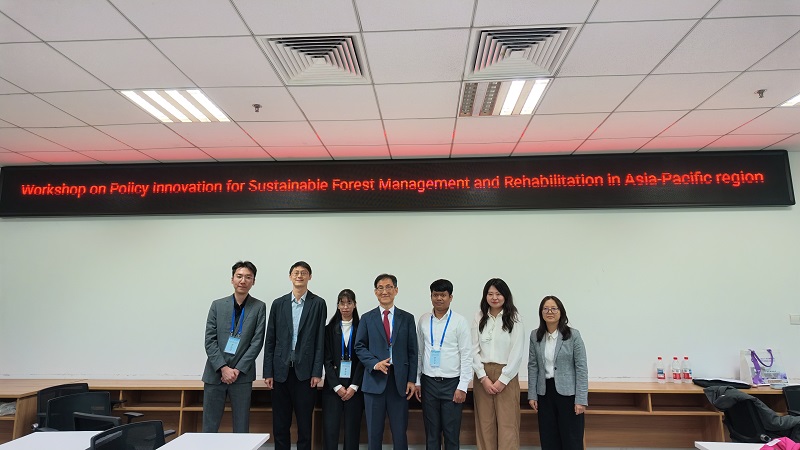
PMD attending the sub-forum
Looking ahead, APFNet will continue to pursue practical actions and cooperation under its four strategic pillars, namely policy dialogue, demonstration projects, capacity building, and information sharing, to advance sustainable forestry across the Asia-Pacific region.