The 2026 Workshop on Forestry Strategic Planning in the Asia-Pacific Region, also known as the 7th Asia-Pacific Forestry Planning Network (FPN) mechanism meeting, was successfully held in Beijing on 14–15 October 2026. The workshop was jointly organized by the Asia-Pacific Network for Sustainable Forest Management and Rehabilitation (APFNet) and the Regional Community Forestry Training Center for Asia and the Pacific (RECOFTC), with the technical cooperation of the Food and Agriculture Organization of the United Nations (FAO). Government officials responsible for forestry, representatives of international organizations, and experts from economies across the Asia-Pacific region attended the workshop. Participants engaged in in-depth exchanges and discussions on forestry planning practices across participating economies and the draft Guidelines for the Formulation of Forestry Development Plans in Asia-Pacific Economies.
Dr. Wang Chunfeng, Executive Director of APFNet, and Dr. Su Yufang, Program Manager of RECOFTC, delivered opening remarks. They highlighted that strategic forestry planning is an important instrument for advancing forestry development in individual economies and contributing to international processes, including the achievement of Global Forest Goals and the United Nations 2030 Agenda for Sustainable Development. The workshop also represented a concrete step towards implementing the consensus on strengthening forestry planning reflected in the Joint Statement of the 2026 APEC Ministerial Meeting on Forestry (MMRF6). In addressing the complex challenges associated with forest conservation and use, economies across the Asia-Pacific region are encouraged to further strengthen policy dialogue, capacity building, and information sharing to continuously improve the scientific basis, coherence, and practical applicability of forestry planning and jointly advance sustainable forestry development across the region.
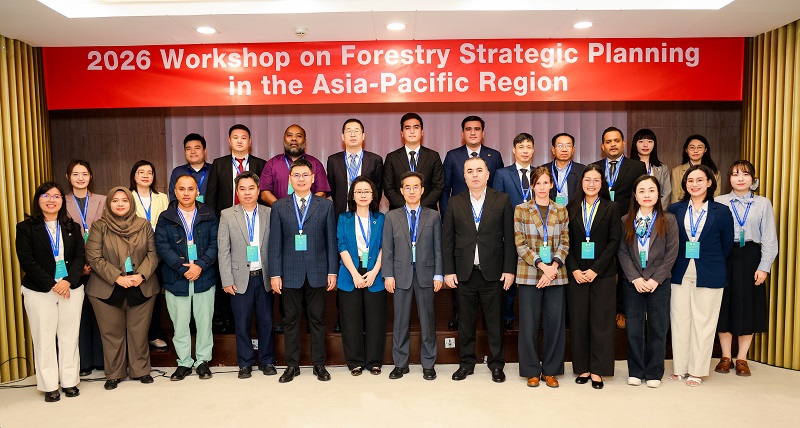
Group photo of meeting participants
Following the Opening Ceremony, representatives from 17 economies across the Asia-Pacific region presented their respective forestry planning frameworks, including their current status, scope, priority actions, and needs for cooperation. All participating economies reported experience in developing forestry development plans. These plans generally cover situation analyses, priority areas, specific actions relating to forest conservation and use, sustainable forest management and desertification control, as well as monitoring and evaluation arrangements and measures to strengthen management capacity. The exchange of experiences among participating economies provided a foundation for further discussion and revision of the draft Guidelines for the Formulation of Forestry Development Plans in Asia-Pacific Economies. During the dedicated session, Mr. Xia Chaozong, invited expert by APFNet, introduced the background, objectives, guiding principles, and overall structure of the draft Guidelines. Drawing on the circumstances and practical experience of their respective economies, participants provided comments and recommendations on the applicability of the Guidelines, indicator design, implementation, and monitoring. Participants recognized that developing a set of guidelines that offers general guidance while taking into account the diverse circumstances of individual economies would help improve the overall quality of forestry planning across the region, advance forestry development, and support the implementation of relevant international forest commitments. The workshop also developed the 2027 Action Plan for the Asia-Pacific Forestry Planning Network, focusing on policy dialogue, information sharing, and capacity building. In addition, FAO and RECOFTC jointly consulted participating economies on the proposed Regional Ambition for Primary Forests in Southeast Asia and the Pacific.
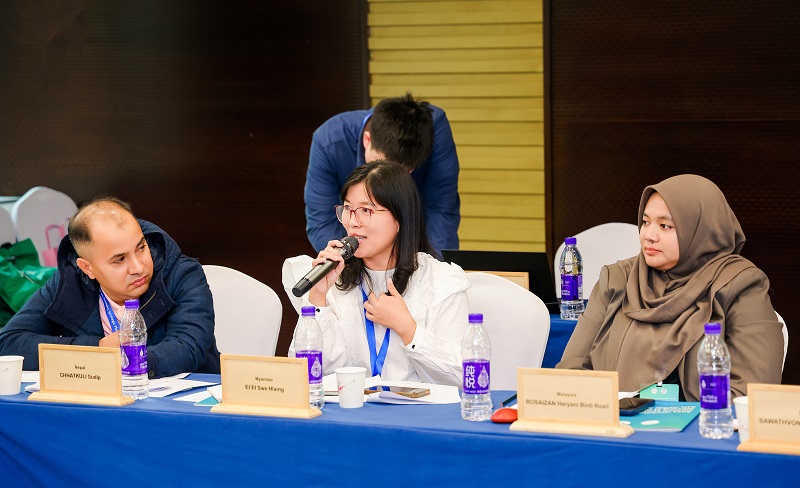
Representatives of participating economies exchange views on the topics under discussion
In addition to the indoor sessions, participants conducted a field visit to Beijing Xishan Forest Farm. They learned about the Forest Culture Demonstration Area, the demonstration site for the close-to-nature transformation of Chinese pine plantations, degraded black locust forest restoration and transformation practices, and forest restoration efforts undertaken at the forest farm since 1953. Through sustained forest restoration efforts, the forest coverage rate at the forest farm increased from 4.7% to 92.73%, accompanied by improvements in forest structure and increasingly evident ecological functions. Throughout this process, forestry planning played an important guiding role in advancing forest restoration and sustainable forest management at the forest farm.
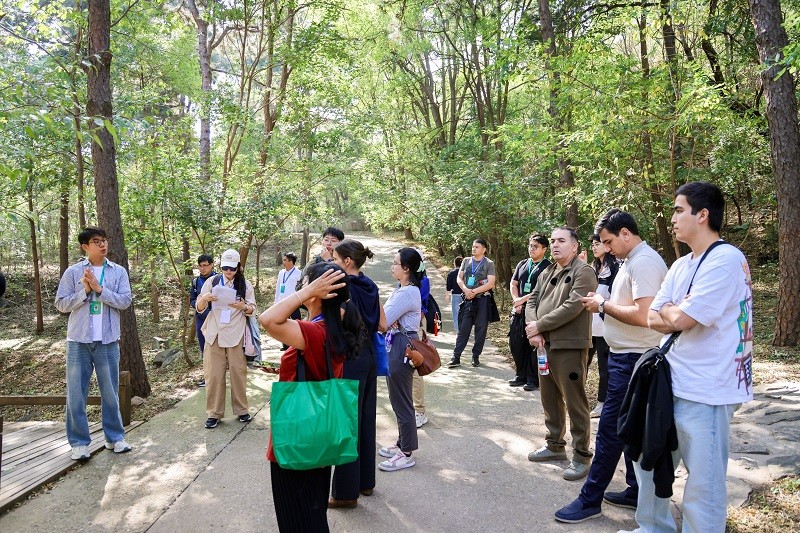
Field visit to Beijing Xishan Experimental Forest Farm
Participants agreed that the workshop had further strengthened regional consensus on cooperation. Looking ahead, APFNet will continue to serve as a platform for promoting exchanges on forestry planning and cooperation in sustainable forest management among participating economies, contributing to the conservation, restoration, and sustainable use of forest resources across the Asia-Pacific region.